The idea of painting a pet like a member of the royal court sounds like a very 2020s internet thing. It's not. People have been doing this, or something close to it, for about five hundred years.
The Dogs of Titian and Velázquez
In the 1500s and 1600s, dogs appeared in royal portraits all the time. Not as pets in the modern sense, as symbols. A hunting dog in a king's portrait meant strength. A lapdog in a queen's portrait meant refinement. Titian painted Charles V's greyhound with the same care he gave the emperor himself. Velázquez included mastiffs and spaniels in his compositions not because the royal family asked him to, but because the dogs added something to the story.
The animals weren't just background props. They were painted with real attention, individual markings, specific postures, recognizable faces. If you had a portrait done by Titian, your dog was getting the Titian treatment too.
Landseer and Victoria: When Pets Became the Subject
The shift happened in the 19th century. Edwin Landseer, Queen Victoria's favorite painter, started making the animals the actual subject. His paintings of the royal dogs, Dash, Islay, Eos, Hector, weren't portraits of the Queen with her dogs. They were portraits of the dogs, period. Full compositions, dramatic lighting, dignified poses.
Victoria commissioned dozens of these. She understood something that took the rest of the world another century to catch up to: pets aren't accessories. They're family members who deserve to be painted like it.
The Gap (1900-2020)
For most of the 20th century, commissioning a portrait of your pet was either wildly expensive or impossibly kitsch. You could pay a professional artist several hundred pounds and wait weeks, or you could get a cartoonish caricature at a boardwalk. Nothing in between existed for normal people.
The market essentially went dormant. Pet photography took over, cheaper, faster, and "good enough." But photos never captured what paintings captured. A photograph is a moment. A painting is a statement.
The AI Renaissance
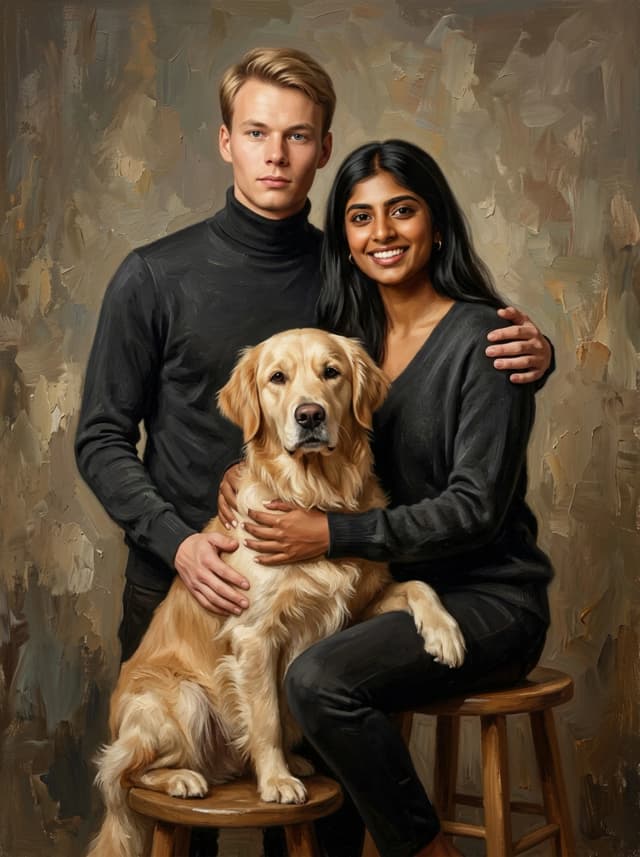
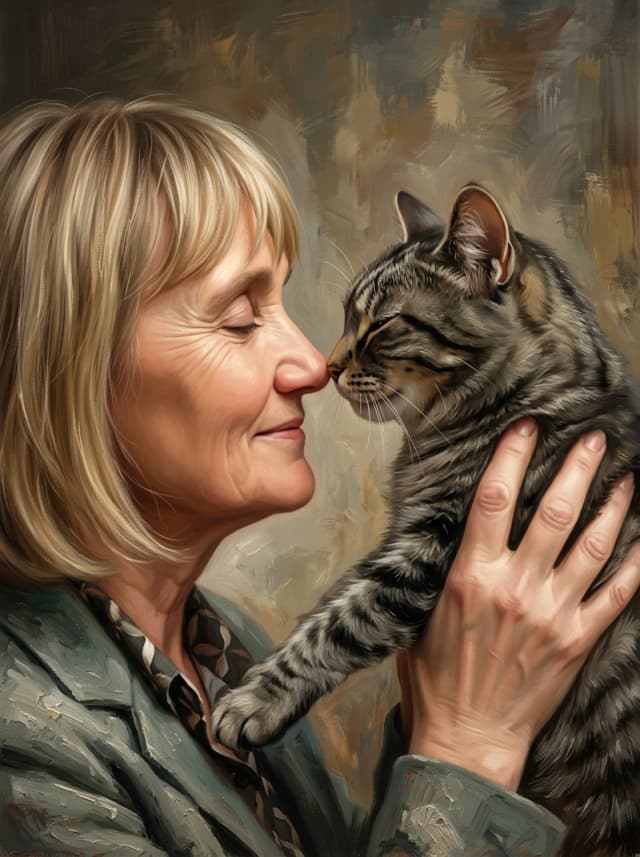
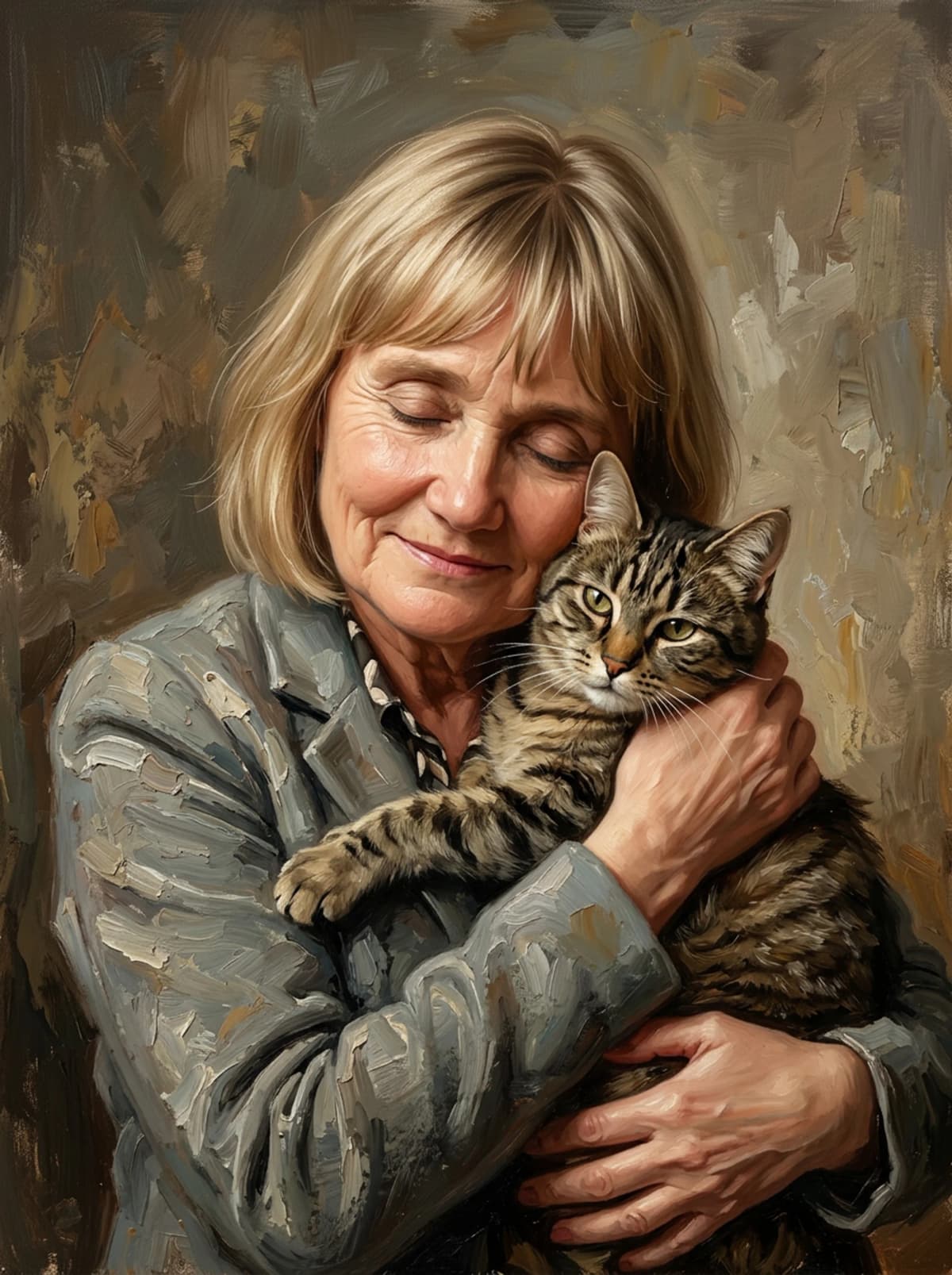
When AI image generation became sophisticated enough to create convincing oil-painting-style images around 2023, pet portraits were one of the first applications that took off. The appeal was obvious: take a technology that's good at generating art, point it at the subject people care about most (their pets), and frame it in an art historical tradition that already existed.
The early versions were rough. Crowns that floated above heads. Faces that looked photographic while the background looked painted. Fur that was too smooth, too perfect, too digital. It looked like clip art, not Velázquez.
But the technology improved fast. Modern AI can render fur with visible impasto brushstrokes, place a crown with realistic weight and compression on the head, and maintain consistent lighting from the darkest background shadow to the brightest highlight on the nose. The gap between "AI-generated" and "plausibly in a museum" shrank to almost nothing.
Why People Hang These on Their Walls
I think the reason renaissance pet portraits work, and I mean genuinely work as wall art, not just as jokes, is because they tap into something real. Your pet already has a personality. They already have dignity (at least sometimes). They already have a face that you find beautiful and expressive and specific.
The portrait just gives all of that a frame. Literally and figuratively. It says: this animal matters to me, and I think they deserve to be commemorated with the same gravity that a Flemish master would give a duke.
Is it a little absurd? Sure. But art has always been a little absurd. And honestly, your cat on a warm golden background makes more sense than most of what hangs in modern galleries.
See It for Yourself
Upload a photo, choose King or Queen, and the portrait appears in about 30 seconds. No payment, no sign-up. If Titian were alive today, he would probably use the same tool. Try it free at getnobly.com.