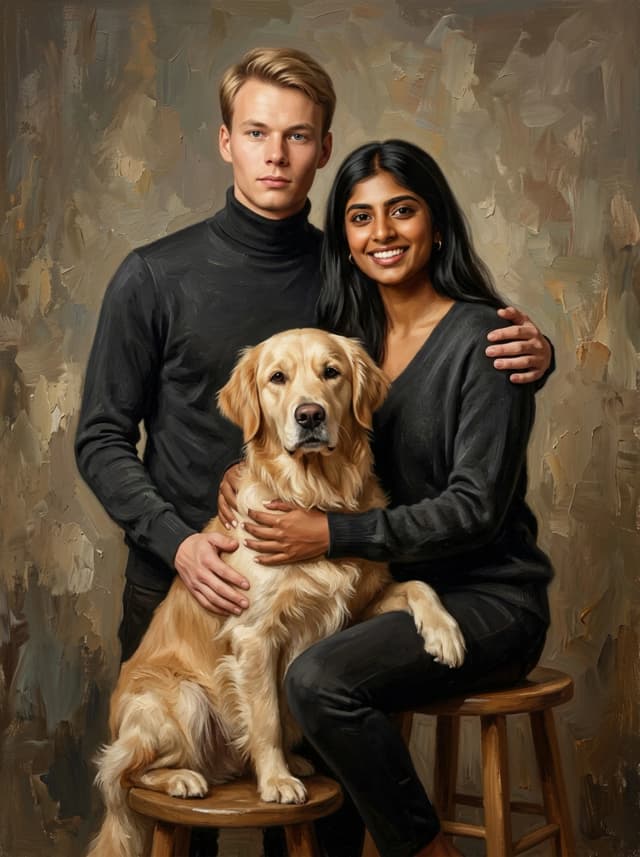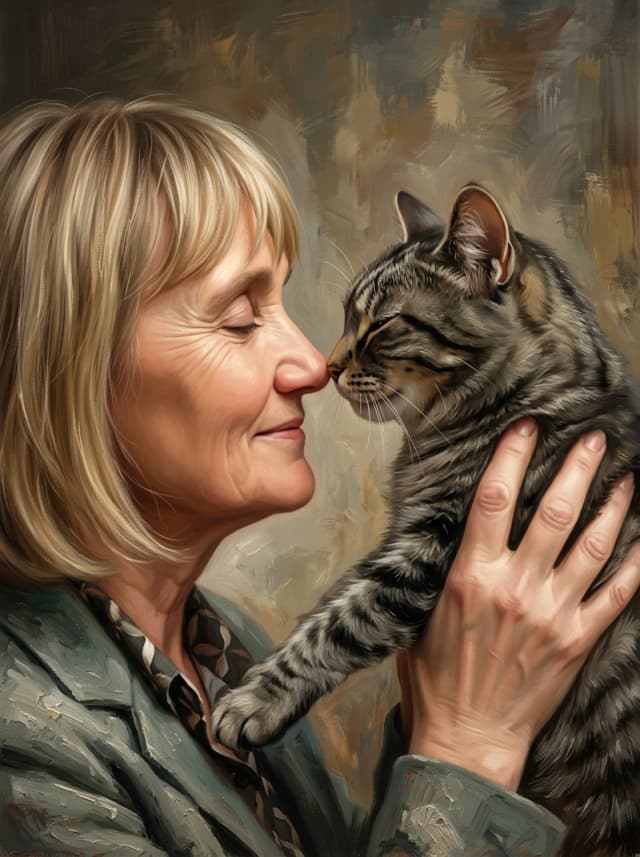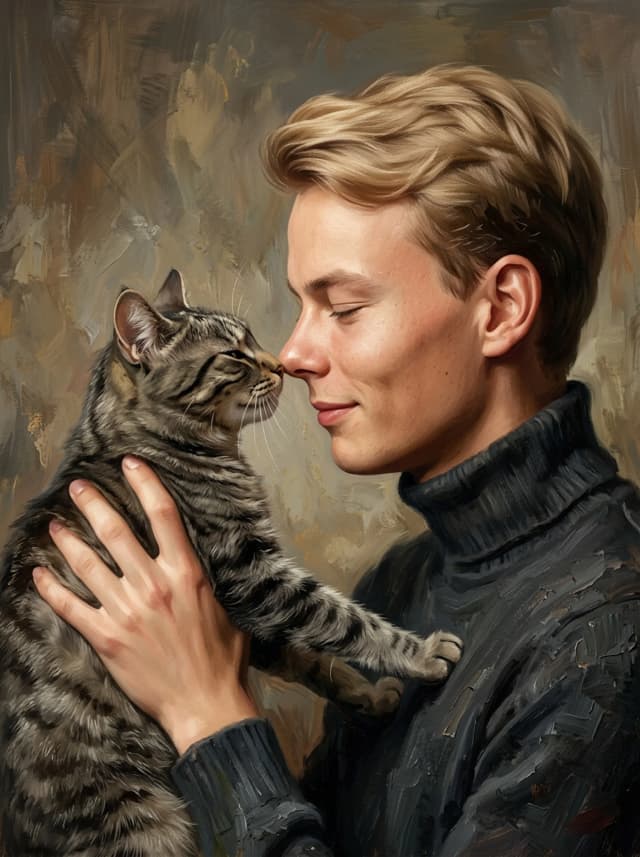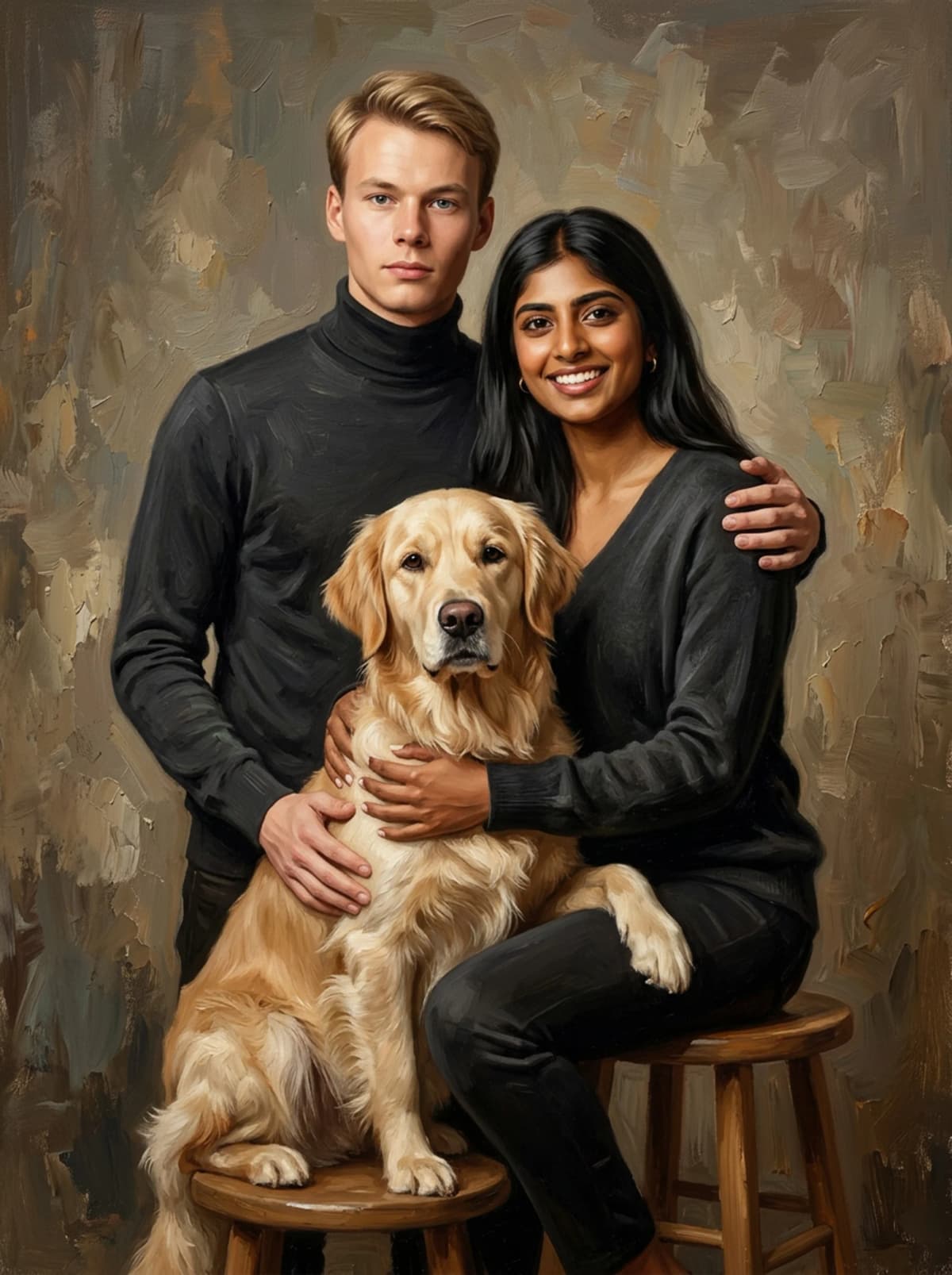
Classical art is dramatic on purpose. Painters like Caravaggio and Rembrandt weren't being subtle, they used extreme light and shadow to make you feel something. We apply the same logic to pet portraits: a single light source, deep shadows, the subject emerging from darkness.
Here's what's actually going on in the style, technically.
Chiaroscuro: One Light Source, Maximum Drama
The word is Italian, "chiaro" (light) and "scuro" (dark). The technique uses a single warm light source to create deep contrast between illuminated areas and shadow. Caravaggio pushed this to extremes. Rembrandt made it warm and intimate.
For pet portraits, chiaroscuro does something specific: it isolates the face. Everything else falls into shadow. Your pet's eyes and expression become the only thing the painting is about. It's focused, powerful, and personal.
Impasto: Paint You Can Almost Feel
Classical painters applied paint thickly in some areas, visible brush ridges, textured surfaces. This is called impasto. It gives the painting a physical presence that smooth rendering can't match. In fur, impasto creates the illusion of individual hairs. In fabric, it suggests heavy velvet and stiff brocade.
Sfumato: Where Edges Disappear
Leonardo da Vinci developed sfumato, the gradual dissolving of edges from light into shadow. In pet portraits, this is what makes the animal look like it belongs in the scene rather than being cut and pasted. Fur bleeds into background. Shadow envelops the edges. The subject emerges from the painting rather than sitting on top of it.
The Dark Background
That deep, warm darkness behind the subject, what's sometimes called the "Rembrandt void", isn't empty. It's atmospheric. It pushes the subject forward, creates depth, and gives the painting an intimate, enclosed quality. Like the subject is being revealed to you from the darkness.
Why It Works for Pets
All of these techniques were designed to say one thing: this subject is important. When you apply them to your pet, the message is clear.