In Norwegian folklore, the skogkatt, the forest cat, was said to be large enough to climb sheer rock faces that even squirrels couldn't manage. The breed showed up in old Norse myths. Vikings may have kept them on ships to control rodents. However it started, the Norwegian Forest Cat has been part of Scandinavian life for a very long time.
Males weigh between 5 and 9 kg. Females are smaller, 3.5 to 5 kg. Lifespan is 12 to 16 years. The coat is long, thick, and water-resistant, with a dense woolly undercoat and long guard hairs that form a mane around the chest and neck.
The Look
Norwegian Forest Cats have a triangular head with a long straight profile, large almond-shaped eyes, and tufted ears with long hairs at the tips. The mane is impressive. The tail is long and heavily plumed. In winter, the coat is at its fullest and most spectacular.
The combination of that wild, almost feral silhouette with the calm, steady temperament of the cat is part of the appeal. They look like they wandered in from the forest. They immediately take over your couch.
Painting All That Fur
The Norwegian Forest Cat coat is a portrait challenge in the best way. You have multiple layers, the shorter fur on the face, the dense ruff around the chest and neck, the flowing fur on the back and tail, all with different lengths and textures.
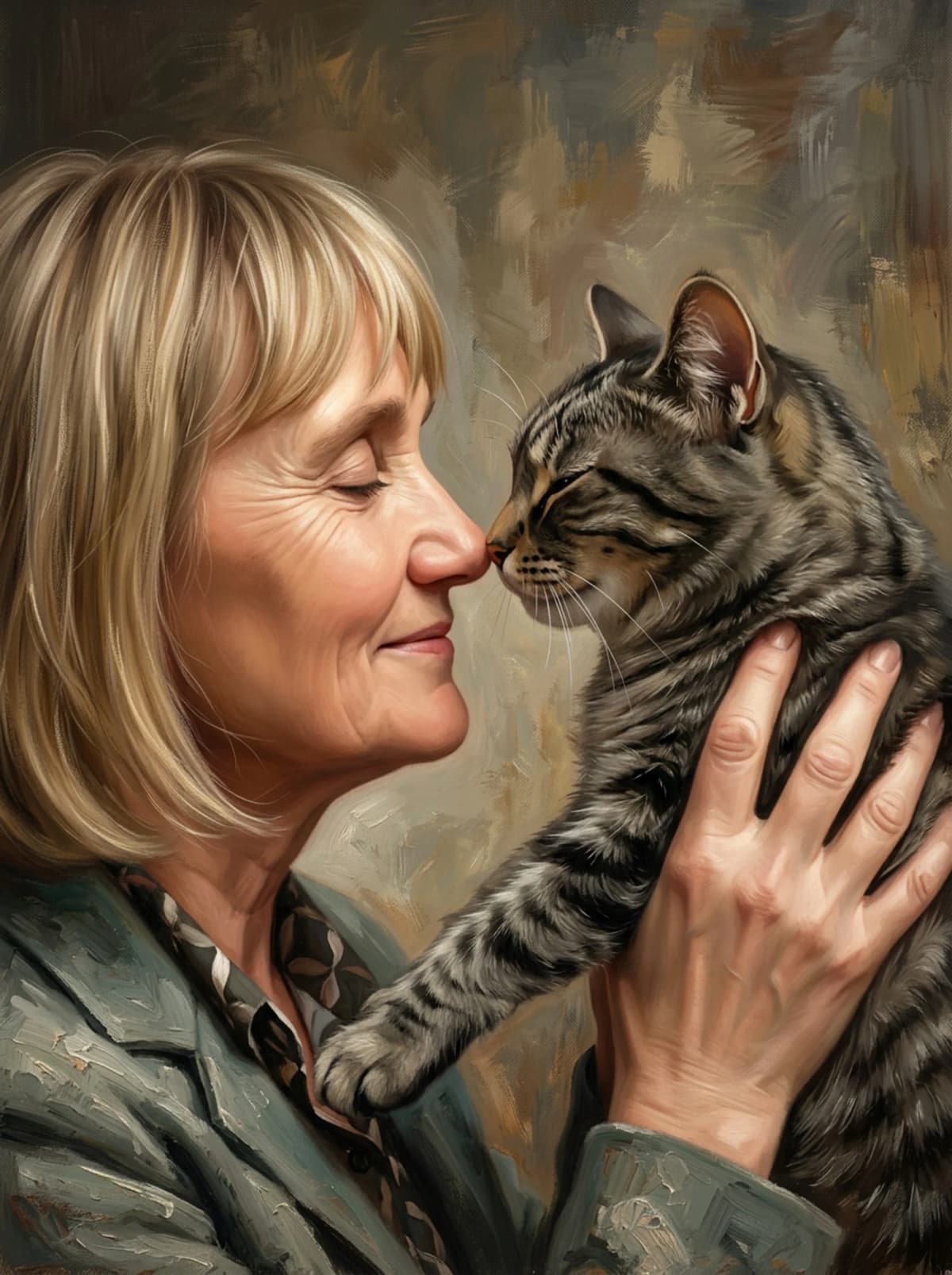
In an oil portrait, each section has to be rendered differently. The face shows individual hairs and fine detail. The mane builds up into flowing masses of color. The tail becomes a sweep of texture and light. It's a lot of work and the result is a portrait that has genuine depth and presence.
Tabby markings, solid colors, and bi-color patterns all behave differently in the coat, which means every Norwegian Forest Cat portrait ends up looking distinct.
Upload a photo at getnobly.com. Free preview, no commitment.